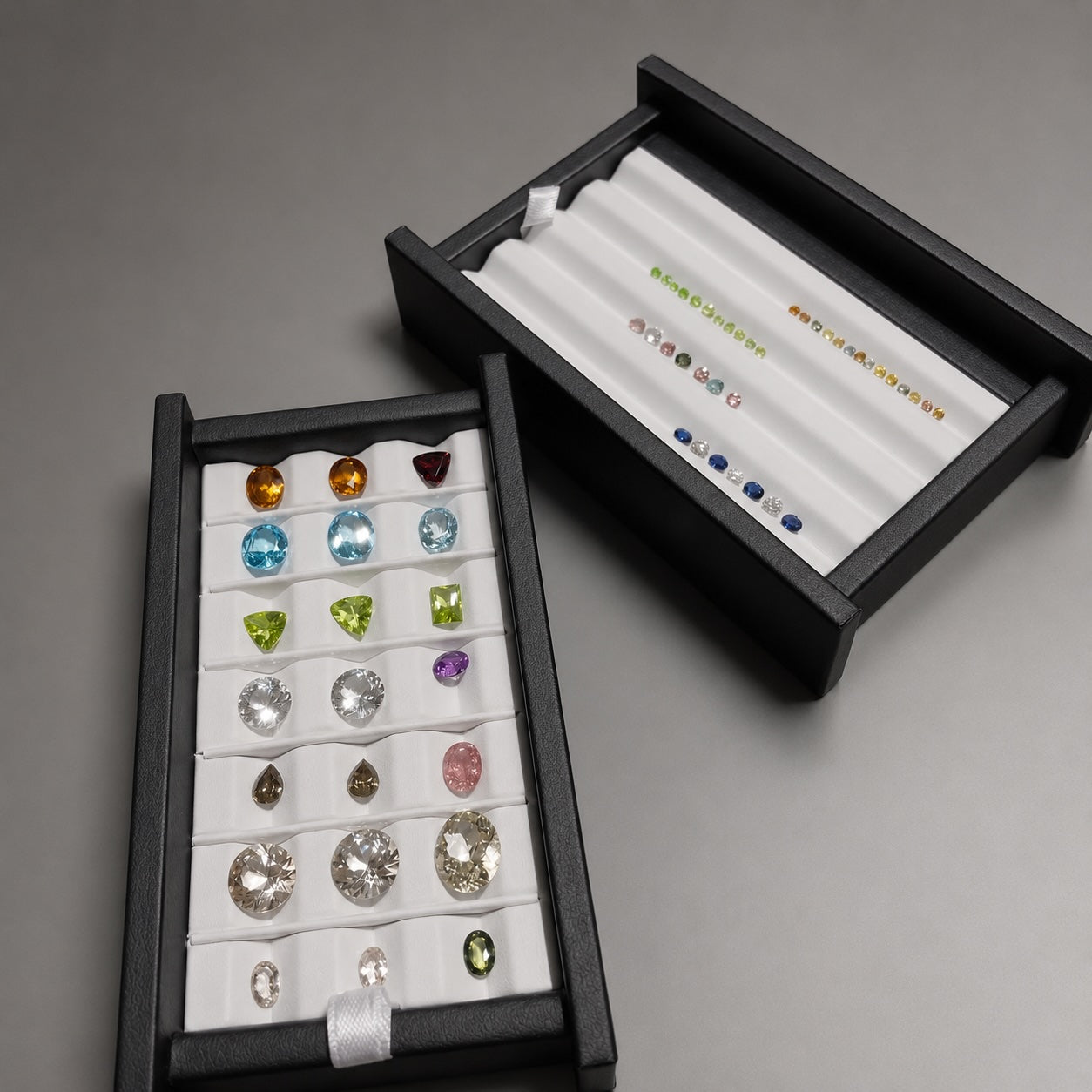
Aiguamarina
L'aiguamarina és la meva pedra preciosa preferida. M'encanta la seva claredat, el seu delicat to blau i la tranquil·litat que comporta. Pertany a la família del beril i té una brillantor noble, gairebé metàl·lica, que se sent suau i arquitectònica alhora. Les millors aiguamarines combinen una excel·lent transparència amb una subtil profunditat de blau platejat.
Ametista
L'ametista és una bonica varietat violeta de quars, perfecta per a joies atrevides i expressives. Un dels seus majors avantatges és la possibilitat de trobar pedres grans i fins i tot molt grans amb un impacte visual excel·lent a un preu relativament accessible. Depenent de l'origen i el tall, el color pot variar des de l'espígol delicat fins al porpra reial profund.
Crisoberil
Al meu entendre, el crisoberil és una de les pedres precioses més subestimades de la joieria. Té un bell brillantor metàl·lic, una claredat excel·lent i colors sorprenentment elegants. El crisoberil de vanadi de tons més freds és especialment fascinant per a mi: un autèntic tresor mineralògic i el meu talismà gemològic personal. I, per descomptat, la meva varietat preferida és l'alexandrita: un crisoberil rar amb un efecte de canvi de color espectacular segons la il·luminació. He treballat amb molts alexandrites de l'Ural, i crear joies amb ells sembla gairebé irreal.
Demantoide
Demantoid és l'orgull de la nostra marca. Valorem aquest granat verd excepcionalment rar per la seva extraordinària brillantor i foc. Els fins demantoides de les muntanyes Urals es troben entre els granats més col·leccionables del món, sobretot quan contenen les famoses inclusions de "cua de cavall": delicades fibres daurades que fan que cada pedra se senti viva. És una pedra preciosa que es pot admirar sense parar.
Diamant
El diamant ocupa un lloc molt especial al món de la joieria, i potser cap altra pedra preciosa està influenciada tan fortament per la moda i les tendències canviants. Malgrat això, continuo respectant-ho profundament. Un diamant ben tallat es comporta molt bé en el procés real de fabricació de joies: precís, brillant, fiable, gairebé arquitectònic en la manera en què maneja la llum. I potser només hauríem d'admetre que segueix sent el símbol màxim de la durabilitat i d'aquell mateix moment.
Maragda
La maragda mai no és una pedra fàcil, ni tècnicament ni econòmicament, però poques gemmes tenen tanta història i pes emocional. El seu ric color verd, inclusions naturals i simbolisme atemporal la converteixen en una de les grans pedres precioses clàssiques. L'esmeralda parla per si mateixa, especialment en les joies d'herència i familiar destinades a viure generacions.
Heliodor
Heliodor és una pedra preciosa extraordinària. Si busqueu una pedra groga, aquesta és la primera que recomanaré, sincerament, probablement l'única. Els seus colors van des de delicats tons llimona fins a rics tonalitats daurades, tot amb l'elegant claredat típica de la família del beril. Mereix ser utilitzat molt més sovint al món de la joieria.
Indicolita
La indicolita és la meva varietat preferida de turmalina, coneguda pel seu inoblidable color blau verdós. Hi ha quelcom de profundament hipnòtic en aquesta ombra: fosc, oceànic, una mica misteriós. Una vegada que veieu una bona indicolita en persona, mai l'oblideu del tot.
Morganita
La morganita és un altre membre de la família del beril. Ofereix un ampli espectre de tons rosats, des de salmó i rosa marró préssec fins a tons suaus i lluminosos. M'encanten especialment les morganites que se senten càlides i subtils més que de color rosa dolç. La seva suavitat funciona molt bé en joies contemporànies i inspirades en herències.
Perla
Dissenyar amb perles sempre és diferent de treballar amb altres pedres precioses. Exigeix una sensibilitat especial a les proporcions, els detalls i l'estil. Les perles poden esdevenir fàcilment massa clàssiques o increïblement modernes, depenent de com es tracten. Personalment, m'encanten les perles d'aigua dolça per la seva irregularitat i el seu caràcter gairebé escultòric. Però mai rebutjaria l'oportunitat de crear una peça a mida amb perles de caracola: una de les joies orgàniques més rares i fascinants.
Rubèl·lita
La rubelita mereix estar separada d'altres turmalines. El seu color és simplement extraordinari: un vermell veritable i saturat amb delicioses notes de baies madures i tons de gerds. A diferència de moltes pedres precioses vermelles, la rubelita té el seu propi caràcter inconfusible: viu, emocional, lleugerament salvatge. Molt sovint aquestes pedres contenen belles inclusions naturals, i a mi això només afegeix encant i personalitat. Una rubèl·lit perfecta hauria de sentir-se viva en lloc de ser estèril.
Rubí
Una pedra preciosa reial dels llegendaris "tres grans". Trobar un robí amb un color realment excepcional (vermell viu i profund sense un mat innecessari de rosa) és increïblement difícil. I potser és exactament per això que els rubis fins segueixen sent una de les inversions més importants del món de la joieria, sobretot si ens fixem en el mercat de les últimes dècades. Els rubins poden ser massa foscos i bordeus, molt tractats, sintetitzats o tractats, tot allò que idealment s'hauria d'identificar i excloure amb l'ajuda d'un especialista experimentat. Al cap i a la fi, precisament per això existeixen els gemòlegs i el que porten anys aprenent.
Safir
Tots admirem els safirs pel seu veritable blau: aquest icònic color blau reial. Però les seves variacions de color verd verd de festa són igual de fascinants. Aquests safirs es comporten molt bé a les joies i es combinen meravellosament amb diferents pedres d'accent: taronja, fúcsia, groc, xampany. I després hi ha el safir Padparadscha, el color d'un cel de sortida del sol, que equilibra el rosa, el préssec i el taronja suau. Cada safir se sent com el seu propi univers.
Spessartina
Els granats Spessartine de vegades s'anomenen "granats Fanta" pel seu viu color taronja mandarina. Les pedres més fines brillen amb una brillantor intensa i sucosa a diferència de gairebé qualsevol altra pedra preciosa. Juntament amb el granat de Malaya, que s'inclina més cap al rosa préssec i els tons de posta de sol polsegosos, és un dels nostres granats preferits per utilitzar en joieria.
Espinela
L'espinela és una de les millors pedres precioses per als tons de lavanda i violeta. A diferència de moltes pedres d'aquesta gamma de colors, combina la suavitat del color amb una brillantor notable, una gran dispersió i una brillantor gairebé diamantada. Però sincerament, si trieu una espinela vermella fina, probablement aquest sigui un dels regals de pedres precioses més correctes i dignes d'inversió que podeu fer.
Topazi
La majoria de la gent coneix el topazi en les seves varietats blaves. Personalment, el prefereixo incolor o amb tons suaus de préssec, perquè permeten una llibertat total per experimentar amb talls i proporcions inusuals. I després hi ha les pedres veritablement úniques: el topazi imperial: brillant, viu, brillant amb flaixos de coñac, daurats i taronges que semblen canviar amb cada moviment.
Turmalina
La turmalina és la pedra preciosa més popular de les nostres joies per la seva increïble paleta de colors. Verds, blaus, grocs, vermells, roses: poques pedres precioses ofereixen tanta diversitat. També és una de les poques gemmes que mostra de manera natural un fort policromisme, on hi ha diversos colors dins d'un sol cristall. Mai hi ha dues turmalines iguals, i aquesta singularitat és exactament el que les fa tan fascinants. M'encanta especialment estudiar la diversitat d'aquest mineral i observar com cada varietat es comporta de manera diferent en la producció de joieria. Algunes turmalines brillen suaument i transparent, altres semblen profundes i vellutats, algunes són gairebé neó. Cada color, patró d'inclusió i estructura de cristall canvien la sensació de la peça final.
Zircó
El zircó és una de les meves pedres precioses preferides per treballar. M'encanta per la seva dispersió excepcional i la seva brillantor viva. Els zircons naturals vénen en molts colors: verd, blau, daurat, xampany, però els meus preferits personals són els tons rosa i cognac i els rars tons rosa-taronja jacint. Un zircó fi té una brillantor gairebé líquida que se sent increïblement viu.